Monitoring the UK’s largest mainland breeding seabird colony
Seabird population data has been collected around Flamborough, Bempton and Filey for many years. This vital data helped to determine the importance of the area to seabirds and was integral to the Special Protection Area (SPA) extension in 2018, which formally created the Flamborough and Filey Coast SPA.
In 2009, a comprehensive seabird monitoring programme was established as a collaboration between the RSPB and Natural England. The purpose of the programme is to monitor annual changes in the breeding success of individual species, as well as carry out a full colony count every five years. The data is shared with partners to inform management of the SPA and is added to the national Seabird Monitoring Programme dataset, managed by the British Trust for Ornithology.
National Seabird Monitoring Programme2023 Summary Results
Click on each seabird below to read a short summary of the data collected this year. Scroll to the end of the page to read the RSPB’s full report.
-
Kittiwakes had their best breeding season since 2010, with 1.02 chicks fledged per pair across 1041 Apparently Occupied Nests. This was despite some localised impacts of avian flu. A long-term downward trend in productivity still remains a concern, however the rapid increase since 2021 is encouraging.
The full colony-count in 2022 revealed 44,574 pairs of Kittiwake within the SPA, which is a slight decrease on 2017 data.
-
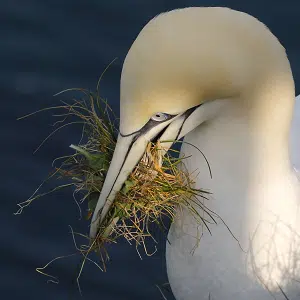
After a very poor year in 2022, gannet productivity increased to 0.62 fledged chicks per Apparently Occupied Nests. In total 238 chicks fledged across a total of 383 nests. Nevertheless, this was the second lowest productivity recorded since 2009, reflecting the likely ongoing impacts of avian flu on this species.
In response to the worrying impacts of avian flu on the gannet colony last year, a boat-based count for gannet was repeated on 16 June 2023. This recorded a total of 15,233 Apparently Occupied Sites, an increase of 2,243 on the count made in June 2022.
-
From the 145 Apparently Occupied Sites monitored over the breeding season, a mean productivity of 0.46 chicks fledged per pair. This is a marginal increase on 2022 data, but the general trend remains one of slight decline.
Across the protected area, 1,216 Fulmars were recorded during the full colony count in 2022, indicating that the population has remained stable since 2017.
-
Across 92 Apparently Occupied Sites, only 17 chicks successfully fledged resulting in a mean productivity of 0.17 chicks per pair. This is the lowest ever productivity recorded within the SPA.
The full colony count in 2022 recorded 810 Herring Gulls, which is a decline on the 2017 count.
-
This year, two shag pairs were monitored with both nests successfully fledging two chicks each, giving a productivity of 2.0 chicks per AON.
Across the site in 2022, 17 Apparently Occupied Nests were recorded, with a population of 34 individuals.
-
A small plot at Filey Cliffs established in 2021 was not monitored this year due to cliff instability.
In 2022, 32 Apparently Occupied Nests were recorded, with a population of 64 individuals.
-
Guillemot breeding success was identical with 2022 data, with a mean productivity of 0.61 chicks fledged per pair from 295 Apparently Occupied Sites.
During the full colony count in 2022, approximately 111,925 Guillemots were recorded. This is in-line with generally positive population trends.
-
Across 405 Apparently Occupied Sites, 208 chicks successfully fledged, resulting in a mean productivity of 0.50 chicks fledged per pair. Predation was seen to impact some monitoring plots, however this may not reflect what is happening across the colony.
Approximately 45,780 breeding Razorbills were counted across the SPA in 2022. It is likely that the site now holds one of the largest Razorbill colonies in the UK.
-
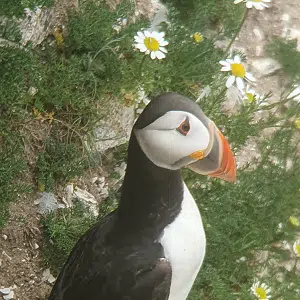
A pre-breeding survey of Puffins ‘staging’ on the sea did not take place this year, due to adverse weather.
In 2022, approximately 3,080 individuals were counted across the length of the SPA. This number provides an indication of colony size and suggests that the population has remained stable since the last count in 2018.
How is breeding success data collected?
Each spring, a dedicated group of RSPB staff and volunteers carry out productivity monitoring for Gannets, Kittiwakes, Herring Gulls, Fulmar, Shag, Cormorant, Guillemots and Razorbills. This data helps to determine breeding success of each species and gives us an idea of what is happening within the colony every summer. Breeding success can be impacted by local challenges such as predation and bad weather, alongside wider pressures on the colony including climate change, food availability and human activities at sea. Monitoring these changes over time provides a unique view into the lives of our seabirds.
Each seabird monitoring volunteer is assigned a ‘plot’ (an area of cliff with good visibility of breeding seabirds and provides a safe vantage point) and chooses 50 nests within that plot to monitor over the course of the breeding season. The contents and outcome of every nest are recorded, but the frequency that plots are monitored varies between species based on how quickly chicks develop. For example, Kittiwake nests are checked and progress is recorded once a week whereas Guillemots are visited every three days. In 2022, 49 plots were monitored providing a wealth of data about the health of the seabird colony.
The iconic Puffin makes use of the holes, cracks and crevices in the sheer cliffs to raise their single chick. This is perfect for protecting against predators and the biting North Sea wind, but it’s not great for monitoring productivity. Instead, RSPB staff monitor how many Puffins arrive at the start of the year to get an idea of the population’s health. Before Puffins find their nest and begin to breed, large numbers will gather on the sea around the cliffs for a short time. With quick reactions from RSPB staff, the number of adults counted can be used to monitor any year-on-year largescale changes in population.
National Seabird Monitoring ProgrammeHow are the full colony counts carried out?
Counting every adult bird within the UK’s largest mainland colony is a huge undertaking which requires a lot of skill and good weather! The full colony counts take place roughly every five years and are completed by a core group of experienced RSPB volunteers and staff. The geology of the cliffs around Flamborough and Filey means that much of the count has to be done by boat, with land-based counts ensuring that the entire site is covered. In 2022, more than 333,000 seabirds were counted by nine observers across a total of 327 hours.
The full colony counts give us an idea of how each species is faring across the population. This gives us a ‘bigger picture’ view on both the Flamborough and Filey Coast SPA and the wider marine ecosystem. As long-lived and mobile species that rely on many other aspects of the marine environment, seabird population changes are often reflective of wider problems. Any fluctuations in seabird numbers can provide a piece of the puzzle to understanding the local and national impacts of international issues, such as climate change.
Coupled with annual productivity monitoring, this robust dataset allows RSPB and Natural England experts to assess how healthy the colony is and whether there are any significant population trends emerging over time. As part of the national Seabird Monitoring Programme, this information is vital to understanding similar trends across all of the UK’s seabird colonies.
Seabird Monitoring Reports
With thanks to the team at RSPB Bempton Cliffs for supporting the development of this page
Find out more…